Saturday, November 6, 2010

MaxQuant


"MaxQuant is a suite of algorithms for analysis of high-resolution mass spectrometry (e.g. Orbitrap and FT) data. It can be used for protein identification for non-labeled samples and identification and quantification for SILAC-labeled samples. MaxQuant includes all steps needed in a computational proteomic platform except that it uses the Mascot search algorithm for peptide identification. In brief, raw data acquired on Orbitrap, is processed using MaxQuant’s Quant module". The processed data is further searched with Mascot. Nature Protocols feature a step-by-step tutorial on how to configure and use this powerful software. http://www.natureprotocols.com/2009/04/16/a_practical_guide_to_the_maxqu.php


The program runs pretty slow on PC if the MS dataset is large. Some procedures appear awkward. For instance, if you change  the fasta files, the Quant step must be conducted completely, taking a lot of time away. Also not every lab has access to Mascot search engine. A relieve news is that the up to coming release of MaxQuant will  have its own search engine. 


It is designed for SILAC labeling MS data. Though it can be forced to analyze unlabelled data, but the results are generally poor.


The MSQuan is also a sibling software from MaxQuant, from the same core developers. Unfortunately, it is not fully maintained, and much harder to use,  according to my personal experience.

Bionformatics market size report 2010: above 6B in 2013.


Below is an excerpt from Gobal Bioinformatics Market Outlook.
More Info: http://www.mindbranch.com/Global-Bioinformatics-Outlook-R459-1026/


Although the effects of recession looming large on different industries over the past year, the development and implementation of computational tools and frameworks for the management, analysis and interpretation of biological information remained the focal point of leading industrial players. Initial efforts in bioinformatics were focused on the analysis of DNA sequence data. Presently, the scope and objectives of bioinformatics research and development have broadened owing to the high generation of data from various sources and for different cellular processes, continuously evolving analytical technologies and the increasing computational capability.

As per our new research report “Global Bioinformatics Market Outlook”, the market for bioinformatics will surge at a CAGR of nearly 26% during 2011-2013 to a value of around US$ 6.2 Billion. Bioinformatics offers an indispensable technology for function assignment and it is widely used for gene annotation. With the increasing R&D investment by companies on bioinformatics and the regulatory support in various countries, we anticipate that the bioinformatics market will post high growth rate in majority of the countries.

At the country level, our study has found that the sales of bioinformatics in South Korea will grow at a CAGR of over 16% to US$ 270 Million by 2013. Other countries like India and the UK will also witness high growth rates in bioinformatics markets at a CAGR of approximately 9.5% and 16% respectively. Japan has demonstrated its capabilities as a global player in bioinformatics databases. Besides, the analysis software and services market for bioinformatics has registered a CAGR of more than 21% between 2007 and 2010.

We have found that the technology has its uses in a variety of areas, including Genomics, Proteomics, Pharmacogenomics and Cheminformatics. Our report provides the market size of these application areas for the past few years. Other research areas of bioinformatics like oncology are also highlighted in the report.

“Global Bioinformatics Market Outlook” provides extensive information and rational analysis of the global bioinformatics market and emerging trends. It gives an insight into the country trends and key market drivers to help clients with information that facilitates in taking prudent investment decision. The report also includes statistical analysis of different segments along with technological trends to give comprehensive overview of the market.

Saturday, October 30, 2010

Mass Spectrometry related websites, blogs, etc.


Below, I compiled a list of online resources for mass spectrometry related materials, such as tools, conferences, research blogs, etc. I expect these pointers can keep me and potentially other readers updated if they are frequently visited.

The list may finally appear overwhelming, but enjoy them and make good use of them!

ASMS: (American Society for Mass Spectrometry) http://www.asms.org/

Prof. Murry's Mass Spectrometry blog: http://mass-spec.lsu.edu/blog/

Mass Spectrometry Tools: http://chemdata.nist.gov/.

Center for Computational MS@UCSD, http://proteomics.ucsd.edu/

MS software on wiki: http://en.wikipedia.org/wiki/Mass_spectrometry_software

BSI PEAKS studio: http://www.bioinformaticssolutions.com/products/peaks/index.php (commercial one)

MaxQuant: http://www.biochem.mpg.de/en/rd/maxquant/

MS tutorial video: http://www.youtube.com/watch?v=rBymrFzcaPM&feature=fvw

Bioinforamtics tools by R. Edgar.  http://www.drive5.com/
more to come and updated.

If you  find  these stuff useful and informative, or you have some suggestions for improvements, make some constructive comments.

Wednesday, October 20, 2010

ProSightPC


ProSightPC 2.0 Software

Thermo Scientific* ProSightPC, the first stand-alone software for analyzing top-down proteomics data, has been enhanced to add support for middle-down and bottom-up experiments, making it an all-around tool for identification and characterization of both intact proteins and peptides.
ProSightPC* 2.0 software enables high-throughput processing of all accurate-mass MS/MS data, whether from top-down, middle-down or bottom-up experiments including the characterization of proteins with known PTMs. ProSightPC 2.0 software uses multiple search modes to determine the exact protein sequence including modifications and alternative splicing. It is the only proteomics software that allows the user to search their tandem MS data against proteome warehouses containing the known biological complexity present in UniProt.

ProSightPC 2.0 software is a complete software package for the identification and characterization of proteins, peptides, and PTMs. It features multiple search modes and can accommodated data generated with several different fragmentation techniques.
Supports top-down, middle-down, and bottom-up experiments
Includes five different search modes, including Accurate Mass, Biomarker, Sequence Tag, Single Protein and Gene Restricted search modes
Processes fragmentation data from ECD, IRMPD or CID

The proprietary ProSight Warehouse includes all known post-translational modifications (PTMs), alternative splicing events and single nucleotide polymorphisms (SNPs)
Import FASTA databases and shotgun annotates these databases with all possible modifications
Includes Sequence Gazer, which allows users to review search results and add, remove, or change modifications to look for better fits

Compatible with:
LTQ FT family of hybrid mass spectrometers
LTQ Orbitrap family of hybrid mass spectrometers
Proteome Discoverer software


A user guide

Monday, October 18, 2010

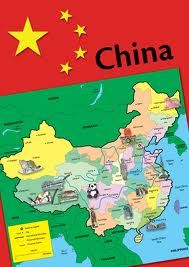
bioinformatics in China

Bioinformatics in China: A Personal Perspective
Liping Wei and Jun Yu

In this personal perspective, we recall the history of bioinformatics and computational biology in China, review current research and education, and discuss future prospects and challenges. The field of bioinformatics in China has grown significantly in the past decade despite a delayed and patchy start at the end of the 1980s by a few scientists from other disciplines, most noticeably physics and mathematics, where China's traditional strength has been. In the late 1990s and early 2000s, rapid expansion of the field was fueled by the Internet boom and genomics boom worldwide and in China. Today bioinformatics research in China is characterized by a great variety of biological questions addressed and the close collaborative efforts between computational scientists and biologists, with a full spectrum of focuses ranging from database building and algorithm development to hypothesis generation and biological discoveries. Although challenges remain, the future of bioinformatics in China is promising thanks to advances in both computing infrastructure and experimental biology research, a steady increase of governmental funding, and most importantly a critical mass of bioinformatics scientists consisting of not only converts from other disciplines but also formally trained overseas returnees and a new generation of domestically trained bioinformatics Ph.D.s.